What Is a Digital Marketing Funnel In 2025, having a website isn’t enough. What you do with the people who visit can make or break your business. That’s where a digital marketing funnel comes in. Think of this funnel as a roadmap that takes a random website visitor and guides them to become a loyal fan of your brand. The best blog post is like a helpful signpost, showing readers the next step at each part of the journey. From first word to final sale, a smart funnel helps US businesses connect, convert, and build real customer loyalty. Whether you’re just starting or you’re fine-tuning your conversion tactics, understanding and optimizing this process is the difference between “just traffic” and steady growth.
What Is a Digital Marketing Funnel and How Does It Work?
A diverse group working on marketing strategies with charts and laptops in an office setting. [https://images.pexels.com/photos/7688336/pexels-photo-7688336.jpeg?auto=compress&cs=tinysrgb&dpr=2&h=650&w=940]
Photo by Kindel Media [https://www.pexels.com/@kindelmedia]
A digital marketing funnel is not the same as a sales funnel or a conversion funnel. Where a sales funnel focuses on closing the deal, a digital marketing funnel focuses on the entire journey from first click to beyond-the-sale loyalty. The funnel maps every step, helping you tailor your blog post and other digital content to move visitors closer to becoming loyal customers.
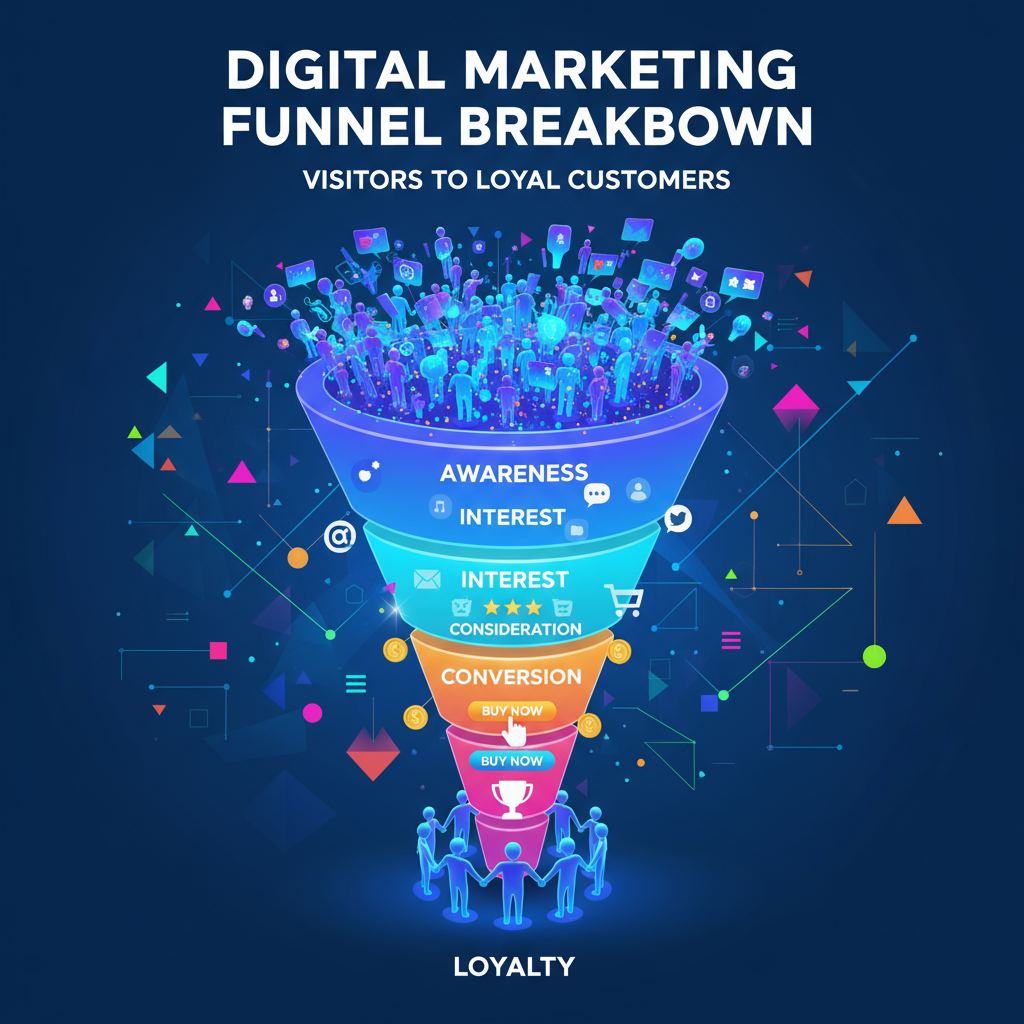
The Main Stages of a Digital Marketing Funnel
- Awareness: People find you for the first time—maybe through a blog post, ad, or social mention.
- Consideration: They engage with your content, learn about your offer, and start comparing you to others.
- Conversion: They make a purchase, sign up, or take another high-value step.
- Loyalty: They come back again and again, sign up for news, or follow you on social.
- Advocacy: They tell friends, share your blog posts, and build your brand for you.
Popular models like AIDA (Attention, Interest, Desire, Action), the Hourglass funnel, looping funnels, and “micro-moment” models all try to explain this customer path, but today’s funnel is more dynamic. Users bounce back and forth or jump between steps. The best strategy is matching your content to what the visitor actually wants (their “user intent”) at each point.
For each stage, think about intent:
- Informational: “How do I fix x problem?” Perfect for a blog post or guide.
- Evaluational: “Which product is best?” Use reviews or comparison pages.
- Transactional: “I want to buy now.” Roll out fast checkouts and special deals.
Tying your blog post content to user intent is key to high conversion. For a detailed overview, see Digital Marketing Funnel Stages, Explained by First Page Sage [https://firstpagesage.com/seo-blog/digital-marketing-funnel-stages-fc/].
Optimizing Each Funnel Stage: From Visitor to Loyal Customer
Content and marketing tactics change at each step of the funnel. What works for awareness won’t always work for loyalty. Here’s how you can tune your funnel for every stage in 2025—and make every blog post count.
Top of Funnel (Awareness)
This is where you draw in brand new faces. Your blog post can shine by showing up on Google for common questions or problems. Try:
- SEO blog posts that answer “how to” or “what is” questions
- Social media ads that spark curiosity
- Partnering with influencers who match your brand’s voice
Tip: Aim your top-funnel content at solving problems, not selling. Use analytics to track things like unique visitors, session length, and bounce rate.
Middle of Funnel (Consideration)
Now, your visitor trusts you enough to look closer. Your job is to keep the conversation going:
- Offer guides, success stories, or detailed comparison blog posts
- Use email drip series to answer common questions and share useful tips
- Host webinars or live Q&A sessions
- Set up retargeting ads that show up as reminders after a user visits your page
The best metric here: Engagement. Monitor email open rates, click rates, page depth, and repeat visits.
Bottom of Funnel (Conversion)
This stage is about moving someone from “maybe” to “yes.” Remove any friction:
- Share limited-time offers or personal discounts through your blog or a sidebar ad
- Add live chat or messaging for last-minute questions
- Streamline your checkout process so it’s as quick as possible
Conversion rates, abandoned cart stats, and final sales numbers tell you what’s working.
Post-Purchase (Loyalty & Advocacy)
A great funnel doesn’t end after the first purchase. Bring customers back and turn them into your fans:
- Send thank you emails or loyalty rewards
- Ask for a review with a link right in the email or blog post
- Invite them to join your community or private groups
Track customer retention, repeat purchase rates, and social shares. A returning visitor is often more valuable than a brand-new one.
For more guidance, review this comprehensive guide to the digital marketing funnel on inBeat [https://inbeat.agency/blog/digital-marketing-funnel].
Key Metrics for Each Funnel Stage
Funnel Stage
Main Goal
Common Metrics
Sample Blog Post Type
Awareness
Attract new visitors
Traffic, Impressions
“How-to” Guides, Explainers
Consideration
Build trust, inform
Engagement, Repeat visits
Case Studies, Comparisons
Conversion
Drive action
Conversion Rate, Sales
Product Highlights, Offers
Loyalty/Advocacy
Keep & motivate users
Repeat rate, Referrals
Thank-Yous, Loyalty Tips
Each metric gives you a signal to refine your blog post or website for even better results.
Leveraging AI and Automation for Higher Conversions
AI and automation make life much easier for teams who want to grow fast—without getting stuck in details. Here’s how to put these tools to work for your funnel:
- Predictive Lead Scoring: AI looks at past data to tell you which leads have the best chance to buy.
- Automated Chatbots: These chatbots answer questions 24/7, guide users through checkout, and even pull up related blog posts to solve doubts.
- Content Personalization: Smart software adjusts what a visitor sees on your blog post based on their interests or past behavior.
- Real-Time Campaign Tweaks: Automation tools can pause, ramp up, or redirect your ads and messages while you sleep.
Benefits? You save time, reach the right people, and see higher returns from your funnel and every blog post. AI turns your website into a smart, high-converting machine.
Learn more about digital funnel automation and strategy at DigitalFirst’s blog [https://www.digitalfirst.ai/blog/what-is-digital-marketing-funnel].
Conclusion
Using a digital marketing funnel isn’t just a trend—it’s how you turn random visitors into repeat buyers and fans. Every great blog post walks the reader step-by-step, from a simple question to a firm “yes.” By optimizing every stage of your funnel, you make every click worth more for your business. Take a close look at your blog posts and website flow. Try one new tip from this list, and measure what changes. In a crowded digital market, a strong, user-focused funnel is what sets you apart.
For more insights on designing high-conversion blog funnels, visit Toptal’s advice on blog-to-funnel strategies [https://www.toptal.com/designers/blog-designers/design-conversion-funnels-with-blogs]. Make your next blog post do more than just inform—use it to build loyalty, one visitor at a time.