US companies are quietly changing how they spend their marketing dollars. Instead of putting most of their budget into print, billboards, and old-school ads, they are moving more money into a few focused online plays.
At the center of that shift is a stronger digital marketing strategy built around five areas: AI personalization, PPC ads, omnichannel customer experiences, social media shopping and content, and email automation.
This is not just a big brand trend. It affects small and mid sized businesses too. When your customers research, compare, and buy online, the businesses that show up in smart ways win more sales.
In this post, you will see why spending is rising in each of these five areas, why they tie so closely to revenue and customer loyalty, and how you can use the same ideas to drive your own online growth without wasting budget or guessing what works.
Let’s start with the bigger picture.
Why US Businesses Are Doubling Down On Digital Strategy In 2025

Photo by Diva Plavalaguna
Marketing spend in the US is shifting. A growing part of the budget now goes to digital ads, email tools, data platforms, and AI. Recent industry reports show that digital already makes up most ad spend, and it keeps growing as more customers live on their phones and laptops. You can see this trend in many marketing statistics for 2025.
Customers search on Google, scroll on TikTok, compare prices on Amazon, and read reviews before they buy. Even when they end up in a physical store, the decision often started online. That means every business, from a local dentist to a national retailer, needs a strong digital footprint if it wants to stay in the conversation.
At the same time, competition is rising. More brands are bidding on the same keywords, promoting similar products, and fighting for attention in crowded feeds. So companies are looking for tools that help them stand out, aim their budget better, and get more results from each dollar.
Digital channels offer something print and many TV or radio campaigns never could: clear, near real time feedback. You can see clicks, signups, purchases, and cost per lead. You can adjust, improve, and repeat. That loop is a big reason money is moving away from old channels and into tactics like PPC, AI-powered personalization, and email automation.
Customers Start And Finish Their Journey Online
Think about how you buy today. You might see a product on Instagram, search for reviews on Google, compare options on a few websites, then finally tap “buy now” on your phone. That whole journey happens online.
This is how most customers move. They:
- Discover brands through search, social media, or a friend’s link
- Check ratings and reviews
- Visit the website or online store
- Join an email list or follow on social
- Decide to buy now, later, or never
If your business is missing from these steps, someone else gets the sale.
Picture a local roofing company. Ten years ago, it might have relied mostly on yard signs and mailers. Today, a homeowner grabs their phone, types “roof repair near me” into Google, reads ratings, checks photos on the website, then fills out an online form. A contractor with strong reviews, clear information, and a quick digital follow up has a huge edge.
Whether you sell shoes, software, or lawn care, the pattern is similar. The more visible and helpful you are online, the more chances you have to earn the customer.
Leaders Want Measurable Results, Not Guesswork
Business owners are tired of guessing which half of their marketing works. Digital tools give them data they can see and act on.
With digital strategies, you can track:
- Clicks on your ads
- Email open and click rates
- Website conversions and form fills
- Sales from a campaign
- Cost per lead or per sale
Compare that with a print ad in a local magazine. You might get some calls, but you rarely know exactly which ones came from that ad. The same problem shows up with many traditional channels.
This clear feedback loop is a big reason budgets are moving online. Leaders can say, “We spent $2,000 on this Google Ads campaign and brought in $10,000 in sales,” or, “This email flow brings in 30 extra orders a week.” They can kill what is not working and double down on what is.
If you want to see where digital trends are heading, resources like this guide to digital marketing trends in 2025 show how data and ROI are shaping decisions.
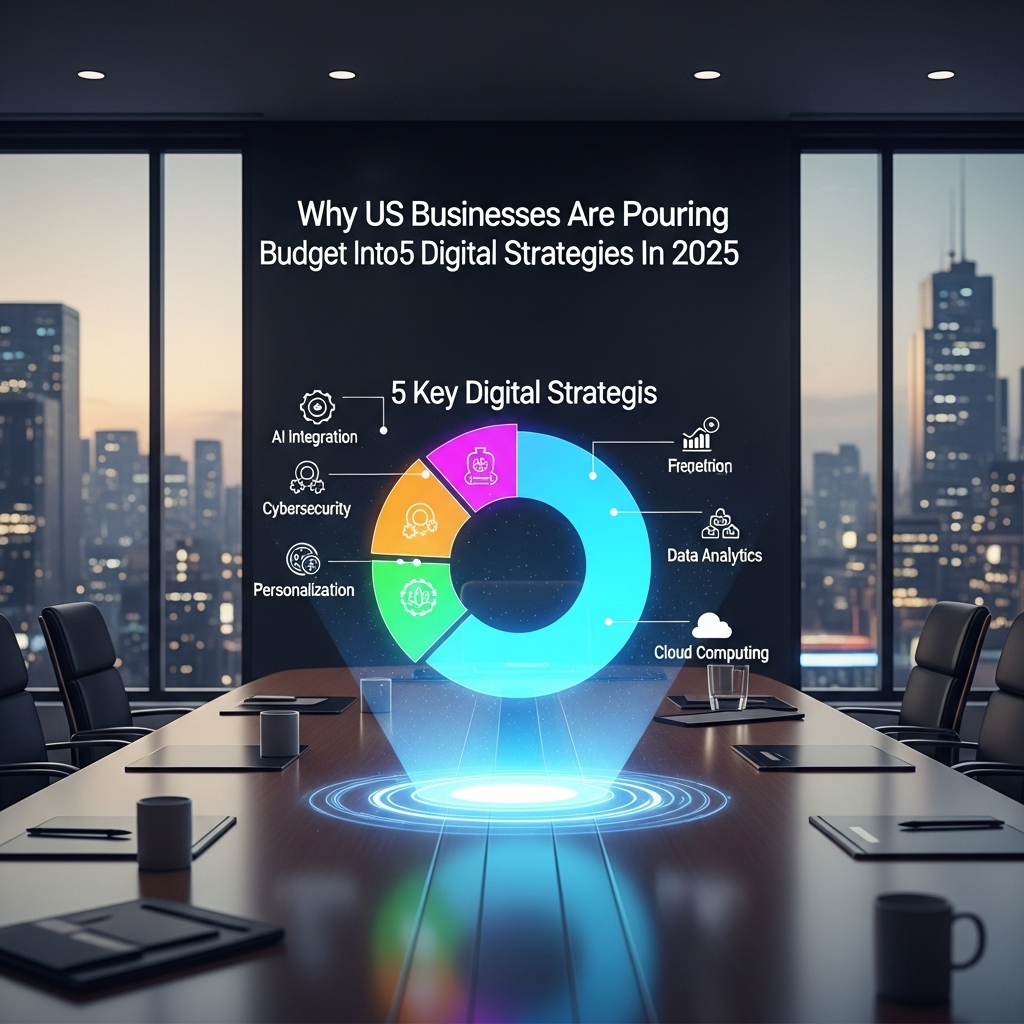
The 5 Digital Strategies US Businesses Are Spending More On
US companies are not just spending more online in general. They are focusing on a few strategies that connect directly to revenue, loyalty, and lower costs.
Those five areas are:
- AI and personalization
- Pay per click ads (PPC)
- Omnichannel customer experience
- Social media shopping and short form content
- Email marketing automation
Each one helps reach the right people, keep them engaged, and move them toward a sale with less waste.
1. AI And Personalization: Smarter Marketing That Feels Personal
If you have ever seen Netflix suggest shows you might like, or Amazon show “you might also like” products, you have seen personalization in action. AI takes that idea and brings it into daily marketing.
In simple terms, AI and personalization mean using data to show each person more relevant content. Instead of sending the same email to 10,000 people, you send different products, messages, or timing based on what each person cares about.
US businesses are investing more here because:
- Customers expect brands to “know” them a bit
- AI tools can sift through data faster than any team
- The right message at the right time converts better
Real use cases include:
- AI chatbots that answer common questions on your site, even at night
- Product recommendations that change based on browsing or purchase history
- Custom email content that highlights items related to what someone viewed
- AI written ad copy that is tested and refined for better click rates
This is not science fiction anymore. Many tools are built for non-technical teams. As covered in resources like this overview of digital marketing trends 2025, AI is quickly becoming a normal part of day to day campaigns.
The payoff is stronger: higher sales, a smoother customer experience, and less manual work for your team. Instead of guessing what to send, you let AI do the heavy sorting while you set the strategy and guardrails.
2. Pay Per Click Ads (PPC): Fast Traffic And Measurable ROI
PPC advertising means you pay each time someone clicks your ad. Google search ads and social ads on platforms like Facebook and Instagram are the most common examples.
Spending on PPC is climbing because it delivers three powerful things: speed, control, and clear data.
PPC can:
- Put your business at the top of Google search results within hours
- Aim ads at people in a specific city, age group, or interest
- Show you exactly which keywords or audiences bring in the most sales
A local plumber might run search ads for “emergency plumber near me” that only show within a 20 mile radius. An ecommerce shop might use shopping ads to keep steady traffic coming to its best sellers.
Over time, businesses test different keywords, ad copy, and landing pages. They adjust bids and budgets based on performance. This cycle of testing and refining helps squeeze more results from the same spend.
Reports on key strategies and trends for digital marketing in 2025 show that search and mobile ads still take a large share of budgets because they keep proving their value.
For many businesses, PPC is the quickest way to get in front of buyers who are already searching for what they sell.
3. Omnichannel Customer Experience: Meeting Shoppers Everywhere They Are
“Omnichannel” might sound like jargon, but the idea is simple. It means your brand feels connected across all the places customers interact with you: website, email, social media, text, apps, and even your store.
Here is a simple example of an omnichannel journey:
- A shopper sees your product in an Instagram Reel.
- They tap through to your site on their phone and browse.
- They chat with support to ask a question.
- Later, they open an email with a small offer.
- They buy online and choose in-store pickup.
If your tools are connected, that shopper feels like they are talking to one brand, not five separate systems. The pricing, messaging, and support line up. Their data is shared across channels, so you recognize them as the same person.
US companies are putting more money into platforms that connect website data, email, ads, and in-store systems. When channels talk to each other, customers have fewer frustrations. They can start on one device and finish on another without repeating themselves.
The result is higher average order values, more repeat purchases, and better word of mouth. People remember how easy it was to buy from you and come back again.
4. Social Media Shopping And Short Form Content: Selling Where People Scroll
Social media is no longer just for building “awareness.” It has become a full shopping channel.
Platforms like Instagram, TikTok, and Facebook now let people discover and buy products without leaving the app. Features like Instagram Shop and TikTok Shop put a storefront inside the feed.
US businesses are raising social media budgets because:
- People spend hours every day scrolling
- Short videos and creator posts build trust fast
- Product tags and shoppable posts turn interest into instant buys
A brand might post a short vertical video that shows how a product works in real life. Viewers see the product tag, tap the price, and check out inside the app. Live shopping events take this further by letting hosts show products, answer questions, and sell in real time.
This shift lines up with what many experts describe in their forecasts of leading marketing trends for 2025. Social platforms keep adding new shopping tools because brands and users both respond to them.
The big idea: social media is not just about likes or followers. It is a direct revenue channel, especially for visual products like fashion, beauty, home goods, and gadgets.
5. Email Automation: Always On Follow Up That Drives Sales
Email marketing automation is like having a smart assistant that sends the right email based on what each person does.
Instead of blasting one newsletter to everyone, you set up automatic flows that react to actions:
- Welcome series when someone joins your list
- Cart reminders when a shopper leaves items without checking out
- Win back campaigns when a customer goes quiet for a while
- Post purchase follow ups that ask for reviews or suggest related items
These flows run 24/7. You write them once, keep improving them, and let them work in the background.
US businesses are increasing spend on email tools because email still has strong ROI. The cost is low, and the revenue can be steady. A simple cart reminder can turn a “maybe later” into a sale today.
Email automation also supports PPC and social. People who click an ad but do not buy right away can join your list and get nurtured with useful content and offers. That way, you are not relying on one click to close the deal.
For small and mid sized businesses, email automation is one of the most budget friendly ways to add more profit without hiring a big sales team.
How To Decide Which Digital Strategy To Invest In First
You probably do not have the budget or time to go all in on every channel at once. The goal is to be smart and focused.
Match Your Digital Investment To Your Biggest Business Goal
Start by asking a simple question: what do you want most in the next 6 to 12 months?
Common goals include:
- More leads
- More online sales
- Higher average order value
- Better repeat business
Then match each strategy to your main goal:
- Need fast traffic and leads? Start with PPC and social ads.
- Want higher conversion rates? Look at AI and personalization.
- Focused on repeat sales and loyalty? Build email automation first.
- Want long term loyalty and brand strength? Invest in an omnichannel experience.
Pick one or two strategies that align with your top goal. Trying everything at once spreads your time and money too thin.
Start Small, Test, And Scale What Works
You do not need a huge budget to get moving. Start with small, low risk experiments such as:
- A modest PPC test budget focused on one key service or product
- One automated email flow, such as a cart reminder or welcome series
- A basic AI chatbot that handles FAQs on your site
- A single social media shopping test with product tags on Instagram or TikTok
Watch simple metrics: cost per lead, email open and click rates, conversion rate, and revenue from each campaign. Keep what performs, fix what is weak, and stop what fails.
These tools are no longer only for big brands with massive teams. With clear goals and steady testing, even a small US business can use them to compete and grow.
Conclusion: Pick One Strategy And Move
US businesses are spending more on these five digital strategies because they offer better data, better experiences, and better returns.
- AI and personalization help show the right message to the right person.
- PPC ads bring fast, targeted traffic with clear ROI.
- Omnichannel experiences make shopping feel smooth across every touchpoint.
- Social media shopping and content turn scrolling into sales.
- Email automation keeps revenue flowing with quiet, ongoing follow up.
You do not need to master everything at once. Choose one area to improve in the next 30 days, set a simple goal, and run a small, focused test. Then build on what works.
Your customers are already online. The sooner your digital strategy lines up with how they buy, the easier it becomes to grow on purpose, not by accident.